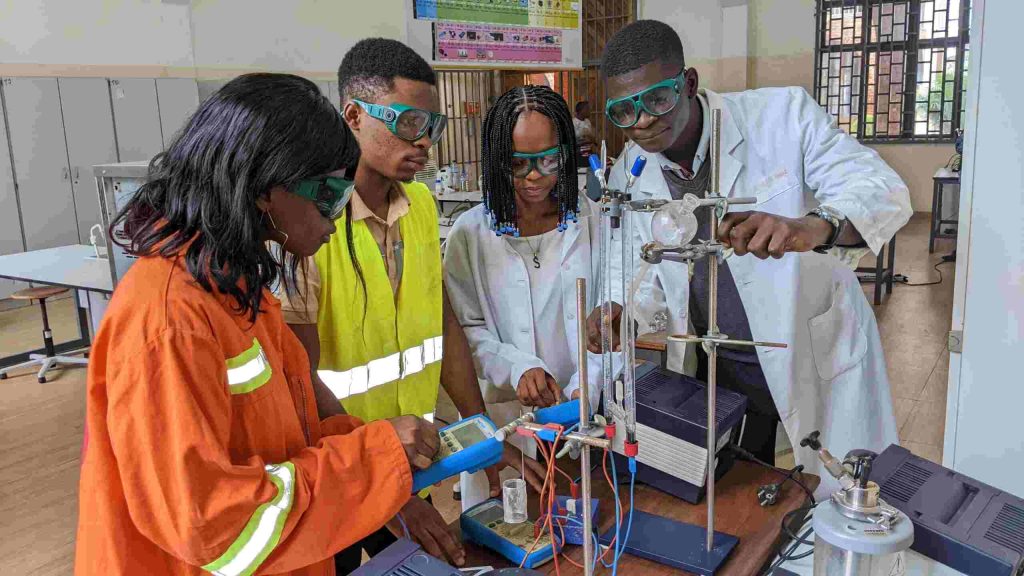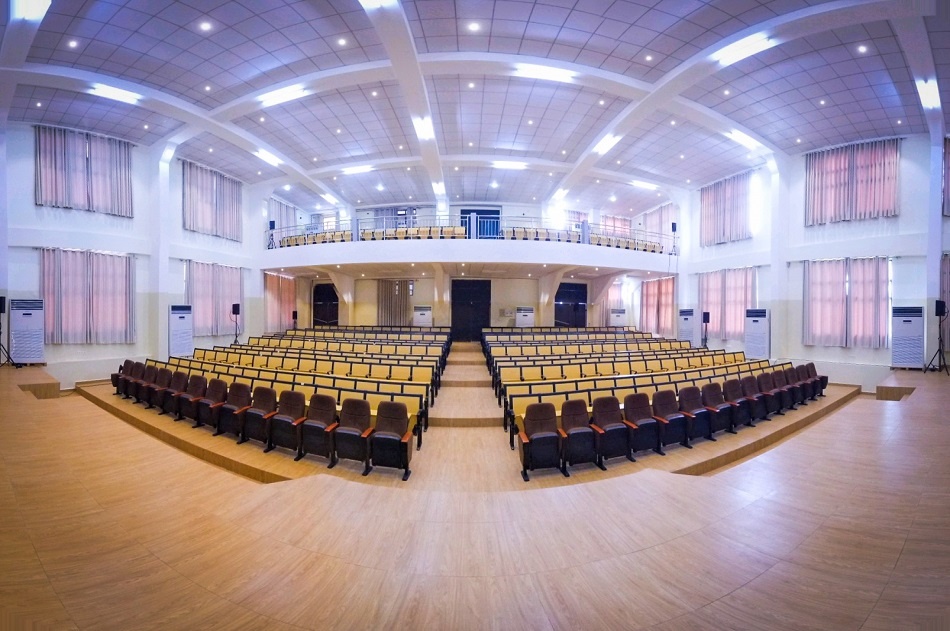

Mapon University’s establishment in Maniema, central DRC, in the digital and new-technology era is a key factor in provincial development. Its technological focus brings development within reach, with support needed from intellectuals, businesses, politicians, public and private companies, NGOs, non-profit organisations and national and international development partners to create a comprehensive strategic plan for this isolated province.
Universities have three main missions: teaching, research and community service. Through the latter two, Mapon University seeks to bring researchers from all sectors together to submit papers addressing comprehensive development.
To make Maniema a centre of knowledge, the University is organising joint Scientific Days for its Engineering and Economics and Management faculties, structured around four themes:
- Theme 1: Education and health
What is the quality of education in Maniema from primary school to university? Which provincial policies promote schooling without gender exclusion? With the LMD degree system and the regulatory framework, what new challenges must be met to provide professionally oriented university training? Distance and online teaching, made indispensable by COVID-19, must be integrated despite remaining obstacles.
Like other eastern provinces, Maniema is affected by diseases including HIV/AIDS. Poverty, sociological and cultural factors and the scars of wars in eastern DRC may contribute. How can these diseases be eradicated and appropriate care provided to everyone? Maniema also faces the global coronavirus pandemic and must strengthen province-wide prevention policies.
- Theme 2: Energy, water and network connectivity
Kalima power station cannot supply the entire province. Solar energy benefits from equatorial sunshine and partially meets needs, but electricity generation must diversify to support major industries. Drinking-water access remains a critical shared challenge. Maniema has abundant surface water and groundwater; qualitative and quantitative studies are needed to plan safe drinking-water production and protect health.
Reliable high-speed internet is essential to provincial development, research and communication, giving researchers access to millions of resources. Despite several internet providers and telecom companies, good connectivity remains difficult in Maniema. Major network disruptions still slow or prevent connections with the rest of the world.
- Theme 3: Politics, economy and transport
Provincial institutional instability undermines public commitment to a shared development vision. New provincial leadership has brought signs of change, although insecurity in some territories continues to delay mining and agricultural investment.
The economy depends heavily on poorly connected neighbouring provinces, driving up prices of essentials and fuel. Entrepreneurship suffers, with few new businesses, high unemployment and skilled people leaving. Banking has developed, but more banks and easier access to credit and microcredit are needed to establish and support small enterprises and start-ups.
Road, river and railway infrastructure must be restored and expanded. Expensive air freight remains widely used for essentials, increasing prices. Lower airfares have increased passenger traffic, requiring more weekly flights and new or additional domestic and international airlines. Freight rail, currently around one train a month, also needs more frequent services to transport goods more cheaply than air freight.
- Theme 4: Innovative research, environment and sustainable development
Economic diversification supports comprehensive development. Innovative, multisectoral research can show how sectors contribute. Interdisciplinary research centres involving all social stakeholders could sustain these gains for future generations. Mining needs inventories of Maniema’s metallic and non-metallic resources, precious and semi-precious stones, through prospecting and exploration. State services must support artisanal miners and prevent revenue leakage.
Agriculture needs support for farmers through credit and microcredit to restore Maniema’s traditional role as the “DRC’s breadbasket”. Soil characterisation could guide crops and industrial agriculture. Fishing and livestock also need support towards industrialisation.
Mining, a major driver of the DRC’s socioeconomic life, destroys wildlife and vegetation without reliable reforestation policies. Maniema’s equatorial forest should be protected: the DRC is described as the world’s second-largest carbon reservoir after the Amazon. Which policies can protect the environment while generating mining revenue and maximise provincial income while ensuring sustainable development?
Digital technology has become a way of life, a route towards paperless societies, a powerful means of socialisation and almost an extension of ourselves. Artificial intelligence improves business performance and productivity by automating tasks formerly requiring human effort and analysing data at scales beyond human capacity. These fields also deserve attention when considering faster, better medium- and long-term development.
The organising committee therefore invites abstracts in French or English for oral presentations in Word and PowerPoint, posters and online presentations. Abstracts must be no longer than one page and include the title, objectives, materials and methods, results, conclusion and prospects.
Abstracts must be emailed by THURSDAY 30 SEPTEMBER 2021 to:
info@universitemapon.ac.cd ; faustinamuri@universitemapon.ac.cd; morgankahiko@universitemapon.ac.cd ; christophebakombo@universitemapon.ac.cd